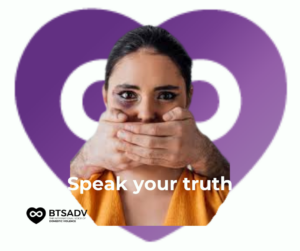
By Survivor Misty Medders
Domestic Violence Awareness Month | October
Not all abuse leaves a bruise. Not every survivor has a visible injury. Sometimes, the deepest wounds are the ones no one else can see.
October is Domestic Violence Awareness Month, a time to raise awareness, challenge misconceptions, and recognize the many forms abuse can take. While physical violence may leave visible evidence, emotional abuse, psychological manipulation, financial abuse, and coercive control can remain hidden behind closed doors.
A person can appear happy in public while living in fear at home. Someone who seems confident and successful may be struggling to survive a relationship that has slowly stripped away their independence, self-worth, and sense of safety.
The absence of visible injuries does not mean the absence of abuse.
Domestic Violence Does Not Always Leave Bruises
When people hear the words domestic violence, they may picture physical assaults, black eyes, broken bones, or emergency room visits. Although physical violence is a serious form of abuse, it is only one part of a much larger picture.
Domestic abuse can involve repeated behaviors designed to frighten, isolate, humiliate, manipulate, or control another person.
Some survivors experience physical violence. Others endure months or years of emotional abuse without a single visible injury. Many experience multiple forms of abuse at the same time.
Hidden signs of domestic violence may include:
- Emotional abuse: Constant criticism, humiliation, insults, threats, and attacks on a person’s self-esteem.
- Psychological abuse: Gaslighting, intimidation, manipulation, and making someone question their own memories or judgment.
- Coercive control: Monitoring someone’s movements, restricting their independence, controlling their decisions, or making them afraid to say no.
- Financial abuse: Taking someone’s money, restricting access to bank accounts, sabotaging employment, or creating financial dependence.
- Digital abuse: Tracking devices, demanding passwords, monitoring messages, or using technology to intimidate a partner.
- Social isolation: Interfering with friendships, creating conflict with family members, or making it difficult to seek outside support.
- Sexual abuse: Pressuring, coercing, or forcing sexual activity without freely given consent.
These behaviors may develop gradually. What begins as jealousy, criticism, or excessive attention can become a pattern of control that leaves a survivor feeling trapped.
Recognizing these warning signs is an important part of domestic violence prevention and awareness.
Emotional Abuse Can Be Difficult to Recognize
Physical injuries may eventually heal, but the psychological effects of abuse can continue long after an incident has ended.
Repeated humiliation can damage self-esteem. Constant accusations may cause someone to question their own judgment. Gaslighting can leave survivors doubting what they remember, what they witnessed, and what they know to be true.
Over time, a person may begin changing their behavior to avoid upsetting their partner.
They might carefully choose their words, hide ordinary purchases, stop contacting friends, or apologize for things they did not do. Everyday decisions become exhausting because every choice feels like it could trigger another argument.
Eventually, the survivor may no longer recognize how much of their life revolves around preventing the abuser’s reaction.
This is one of the reasons emotional abuse can remain hidden for so long.
Friends and relatives may see someone who appears withdrawn, anxious, or unusually quiet without understanding what is happening behind closed doors. Even the survivor may struggle to identify the behavior as abuse, particularly when the relationship also includes affection, apologies, promises, or periods of calm.
Abuse does not have to happen every day to be real.
Moments of kindness do not erase patterns of intimidation. An apology does not undo repeated harm. Promises to change do not automatically create a safe relationship.
Why Survivors May Not Speak Out
One of the most damaging misconceptions about domestic violence is the belief that survivors would simply leave if the abuse were serious.
The reality is far more complicated.
Leaving an abusive relationship can involve significant emotional, financial, practical, and safety concerns. A survivor may fear retaliation, homelessness, losing custody of children, financial hardship, or being disbelieved by the people they turn to for help.
Others may still love the person hurting them. They may remember the relationship as it was at the beginning and hope those moments will return.
Shame can also play a powerful role.
Survivors may worry that others will ask why they stayed, why they did not report the abuse, or why they did not recognize the warning signs sooner. Rather than risk judgment, some choose silence.
In other situations, the abuser has spent years convincing the survivor that no one will believe them.
Threats, isolation, financial dependence, and constant manipulation can make reaching out feel impossible.
For these reasons, leaving an abusive relationship is not always a simple or immediate decision. Each survivor’s circumstances are different, and the safest path forward depends on their individual situation.
Instead of asking why someone stayed, we should ask what made leaving so difficult and what support could help them move toward safety.
The Hidden Impact of Domestic Violence
Abuse affects far more than a person’s physical safety.
Living under constant stress can interfere with sleep, concentration, relationships, confidence, and overall well-being. Survivors may experience anxiety, depression, shame, hypervigilance, or difficulty trusting others.
Some remain on high alert even after reaching safety. Others struggle with the belief that they should have recognized the warning signs sooner.
Children can also be affected by domestic violence, including when they witness abuse, hear threats, or live in a household shaped by fear and control.
These consequences are not always obvious to outsiders.
A survivor may continue going to work, caring for children, attending school, or supporting others while privately struggling to cope. Maintaining everyday responsibilities does not mean someone is unaffected by abuse.
Survival can look like carrying on with life while fighting battles no one else can see.
We must stop measuring the seriousness of domestic violence by what is visible from the outside.
Believe Survivors Without Demanding Visible Proof
Survivors should not have to display injuries, provide photographs, or recount every painful detail before their experiences are taken seriously.
Listening without judgment can make an important difference.
If someone trusts you enough to disclose abuse, allow them to speak at their own pace. Avoid blaming questions or demanding that they immediately make decisions about their relationship.
Instead, consider saying:
- “I believe you, and I’m glad you told me.”
- “You don’t deserve to be treated this way.”
- “You are not responsible for someone else’s decision to abuse you.”
- “How can I support you in a way that feels safe?”
- “You don’t have to figure everything out today.”
Practical support matters, too. Offer to help find professional resources, explore safety-planning options, or connect with a domestic violence advocate if the survivor wants that assistance.
Avoid confronting the abusive partner without considering the potential risks. Actions intended to help can sometimes increase danger if they are taken without the survivor’s knowledge or input.
Most importantly, respect the survivor’s choices and recognize that they understand aspects of their situation that others may not see.
Domestic Violence Awareness Month: Look Beyond the Surface
During October, purple ribbons, awareness campaigns, memorials, and community events help bring attention to domestic violence. These efforts matter, but awareness must extend beyond what we can see.
We need to recognize the warning signs of emotional abuse, understand the damaging effects of coercive control, and challenge the assumptions that keep survivors silent.
Domestic violence can affect people of every age, gender, background, income level, and profession. It can happen in relationships that appear loving to outsiders. It can exist in homes where neighbors hear no arguments and see no obvious signs of trouble.
A person’s achievements do not make them immune to abuse. Financial stability does not guarantee safety. A confident public image does not reveal everything someone may be experiencing privately.
During Domestic Violence Awareness Month, let us remember that the absence of visible injuries is not proof that everything is okay.
The abuse is real even when it is not shown.
Healing Begins With Recognition and Support
For survivors, recognizing abuse can be the first step toward understanding that what happened was not their fault.
Healing is not a straight line. It may involve rebuilding confidence, learning to trust personal judgment, establishing boundaries, accessing support, and rediscovering an identity that was overshadowed by the relationship.
No one should be expected to recover on a specific timeline. Every survivor deserves patience, compassion, and access to resources that respect their individual needs.
At Break The Silence Against Domestic Violence (BTSADV), survivor-focused support, educational resources, and shared experiences help people understand abuse and find pathways toward healing. Visit BTSADV.org to explore survivor resources, stories, and support programs.
If you or someone you love is experiencing domestic violence, help is available through the National Domestic Violence Hotline. Call 1-800-799-SAFE (7233), text START to 88788, or use the website’s online chat to connect with an advocate. If you are in immediate danger, call 911 when it is safe to do so.
Seeking support does not require having all the answers. You do not need visible injuries to ask for help, and you do not have to wait for the situation to become worse before taking your concerns seriously.
A Message for Every Survivor
Perhaps no one has noticed the changes in your behavior. Maybe you have become quieter, more anxious, or less confident than you once were. You might be hiding what is happening because you are afraid of being judged or because you are still trying to understand it yourself.
Whatever your circumstances, your experience matters.
You deserve to feel safe in your home, deserve relationships built on respect rather than fear, to make decisions without being threatened, controlled, or humiliated.
Your pain does not need to be visible to be valid. Your story does not need to be proven to deserve compassion. And your experience does not become less real because someone else cannot see it.
This October, and throughout the year, let us look beyond the surface, listen without judgment, and create a world where survivors are met with understanding instead of blame.
Because domestic violence awareness means recognizing not only the injuries we can see, but also the suffering that remains hidden.
The abuse is real, even when it is not shown. And every survivor deserves to be heard.