By Shannon Brown
When “Concern” Isn’t Actually Care
Not all abuse is obvious.
Some of the most harmful forms of control don’t leave visible marks—they leave confusion, self-doubt, and emotional exhaustion. What makes coercive control especially dangerous is how easily it can be mistaken for love, concern, or even “normal” relationship behavior.
Understanding the difference between healthy boundaries and coercive control can be life-changing—and in some cases, life-saving.
What Is Coercive Control?
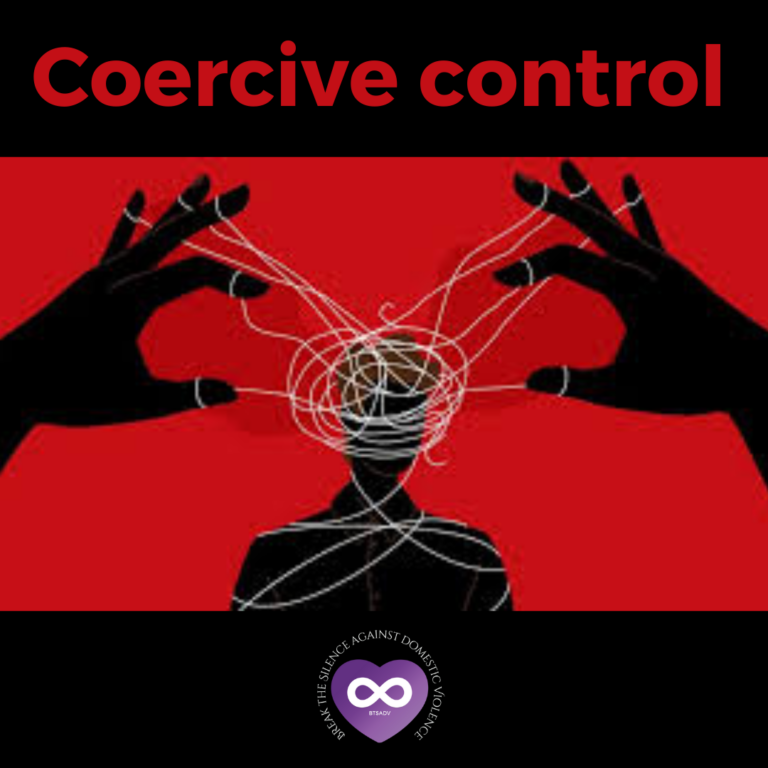
Coercive control is a pattern of behavior used to dominate another person and take away their independence. It’s not about one argument or a bad day—it’s ongoing, intentional, and often escalates over time (Stark, 2007).
It can include:
- Isolating someone from friends and family
- Monitoring their phone, messages, or location
- Controlling finances or employment
- Using manipulation, threats, or gaslighting
Over time, this kind of behavior can leave someone feeling trapped, dependent, and unsure of their own reality—key signs of psychological abuse (National Domestic Violence Hotline, n.d.).
It can also create a trauma bond, where cycles of control and emotional highs and lows make it even harder to leave.
A Real-World Example of Coercive Control
Coercive control rarely starts in obvious ways.
It might begin with frequent check-ins: Where are you? Who are you with? When will you be home? At first, it may feel like care or attentiveness. But gradually, those questions become expectations—and then demands.
Over time, a partner may become upset when you spend time with others, question your decisions, or insist on access to your phone or location. You may find yourself changing your behavior, not out of choice, but to avoid conflict.
What once felt like concern slowly becomes control. That’s how coercive control works—quietly, gradually, and often invisibly.
What Are Healthy Boundaries?
Healthy boundaries are limits you set to protect your emotional, mental, and physical well-being.
They are:
- Clearly communicated
- Based on your personal needs
- Respectful of both people
- Open to conversation and adjustment
Boundaries are about protecting yourself—not controlling someone else.
The Legal Reality: Coercive Control in the Courts
Coercive control is increasingly recognized as a serious form of abuse.
Research by Evan Stark defined it as a “liberty crime,” highlighting how it restricts a person’s freedom even without physical violence (Stark, 2007).
This understanding helped shape legal reform in the United Kingdom. Under the Serious Crime Act 2015, coercive and controlling behavior became a criminal offense.
Courts have prosecuted cases involving:
- Monitoring a partner’s movements
- Restricting communication
- Controlling daily routines
Even without physical harm, these patterns were recognized as creating fear, dependency, and loss of autonomy.
Why This Matters in the United States
While there is no federal law specifically criminalizing coercive control in the U.S., awareness is growing.
It is increasingly considered in:
- Protective orders
- Custody decisions
- Risk assessments for escalating violence
Research shows that coercive control is often linked to more severe abuse, including physical violence (Centers for Disease Control and Prevention, 2022).
Nearly 1 in 4 women and 1 in 9 men experience severe intimate partner violence, including psychological abuse (CDC, 2022).
Side-by-Side Comparison
🔴 Coercive Control
- “You’re not allowed to go out.”
- “Give me your passwords.”
- “If you loved me, you wouldn’t talk to them.”
- Monitoring movements without consent
- Punishing independence
🟢 Healthy Boundaries
- “I feel uncomfortable—can we talk about it?”
- “Privacy is important to me.”
- “I need time with my friends to feel balanced.”
- Respecting autonomy
- Encouraging open communication
Language Matters: “I Feel” vs. “You Can’t”
The way something is said often reveals what it really is.
Healthy boundaries sound like:
- “I feel…”
- “I need…”
- “I’m not comfortable with…”
Coercive control often sounds like:
- “You can’t…”
- “You’re not allowed…”
- “If you loved me, you would…”
Boundaries focus on self. Control focuses on power over someone else.
Intent vs. Impact
One of the clearest ways to tell the difference is by looking at both intent and impact:
- Boundaries → self-protection, respect, safety
- Control → dominance, restriction, fear
If a behavior consistently leads to fear, confusion, or loss of independence, it is not a boundary—it is coercive control (Women’s Aid, n.d.).
Why Survivors Often Don’t Recognize It
Coercive control can be difficult to identify because:
- It develops slowly, often framed as love or protection, creates emotional dependency, and gradually erodes self-confidence
Many people don’t recognize what’s happening until they feel completely trapped.
What Healthy Love Actually Looks Like
In a healthy relationship:
- You can disagree without fear, maintain your independence, voice is respected, and eel safe being yourself
Love should never require control, fear, or isolation.
If This Feels Familiar
If you’re reading this and recognizing your own relationship, you’re not alone—and this is not your fault.
What you may be experiencing has a name. And naming it is the first step toward understanding it.
Support exists, and there are safe ways to begin exploring your options.
Naming It Is Power
Coercive control thrives in misunderstanding and silence.
By learning the difference between control and boundaries, we can:
- Recognize abuse earlier
- Support survivors more effectively
- Prevent long-term harm
Because everyone deserves a relationship built on respect—not control.
Resources & Support
- National Domestic Violence Hotline: 1-800-799-7233 | Text START to 88788
- Break the Silence Against Domestic Violence: Breakthesilencedv.org
- RAINN: 1-800-656-HOPE https://rainn.org/
- Childhelp National Child Abuse Hotline: 1-800-422-4453