By Iris Pendelton
Love After Trauma
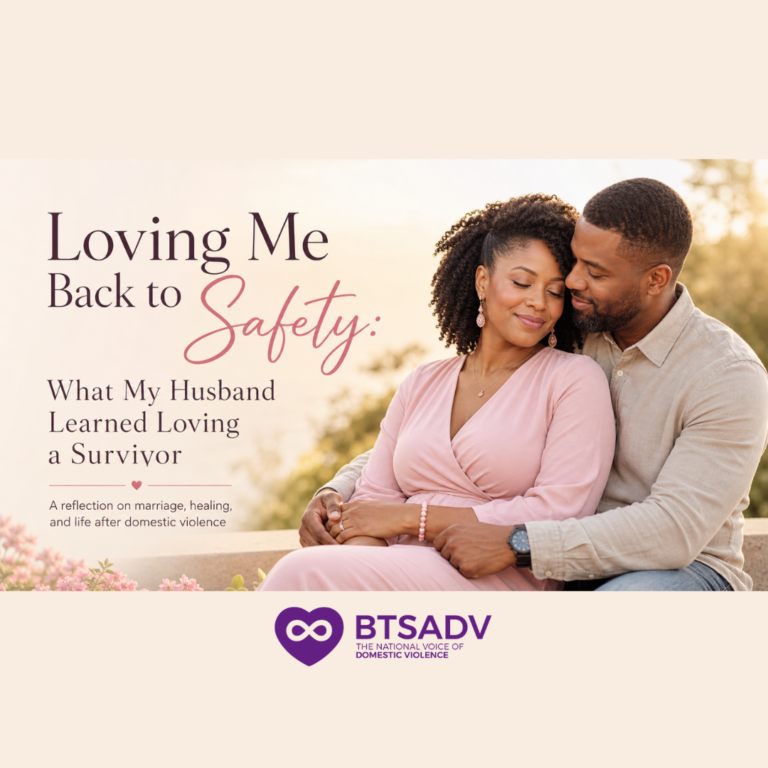
Recently, my husband and I were invited to do a local radio interview about something deeply personal—what it means to love, support, and build a life with someone who has survived domestic violence.
It was a powerful conversation.
Because while survivor stories are often told through the lens of pain, escape, and recovery, there’s another part we don’t talk about enough:
What it looks like to be loved after trauma.
Learning What Safety Really Means
If my husband were to describe what he has learned, I believe he would say this:
Loving a survivor requires patience, understanding, and a willingness to redefine what safety truly means.
In the beginning, there were moments he didn’t fully understand. Times when my reactions seemed bigger than the situation in front of us. A shift in tone. A pause in conversation. A misunderstanding that carried more weight for me than expected.
Not because I wanted it to.
But because my mind and body had been trained to protect me long before I ever felt safe.
Healing Doesn’t Happen Overnight
One of the most important lessons we’ve learned is this:
Healing is not instant.
Love does not erase fear overnight.
A healthy relationship does not undo years of survival mode all at once.
Even in a safe, loving marriage, past trauma can show up in unexpected ways.
There were moments when I needed reassurance.
Moments when I shut down instead of speaking.
Moments when peace felt unfamiliar because chaos had once been normal.
And in those moments, my husband had to learn something important:
I wasn’t just reacting to the present—I was responding to what my past had taught me to expect.
Unlearning Fear, Learning Trust
At the same time, I had my own work to do.
I had to learn:
- That he was not my past
- That disagreement did not mean danger
- That love could be calm, steady, and safe
- That I could express my feelings without being punished
- That vulnerability did not mean giving someone power to hurt me
Trust, for me, was something I had to rebuild piece by piece.
What Supporting a Survivor Really Looks Like
If you asked my husband what changed for him, I believe he would say this:
He had to grow in how he communicates.
He learned that:
- Tone matters
- Timing matters
- Gentleness matters
- Consistency matters
Creating safety wasn’t about saying “I love you.”
It was about showing it—every single day—through patience, honesty, reassurance, and follow-through.
You Don’t “Fix” a Survivor—You Stand Beside Them
During our radio interview, we talked about something that felt especially important:
Supporting a survivor is not about fixing them.
Trauma doesn’t disappear just because the relationship has changed. It can affect communication, trust, intimacy, decision-making—even how someone receives love.
What survivors need is not someone to repair them.
They need someone willing to understand, to listen, and to walk alongside them as they heal.
Seeing Strength Instead of Brokenness
One of the greatest gifts my husband has given me is this:
He has never seen me as broken.
Even in moments when I struggled to see my own strength, he saw it clearly. He stood beside me as I reclaimed:
- My voice
- My confidence
- My joy
- My identity
- My peace
He has been there for the hard moments—the triggers, the tears, the setbacks—but also for the quiet, beautiful moments of growth.
What Healthy Love Actually Feels Like
Loving a survivor has taught him something powerful:
Love should feel safe.
Not like control, fear, walking on eggshells.
Real love:
- Is patient
- Listens without judgment
- Makes space for healing
- Does not weaponize pain
It creates a home that feels peaceful—not unpredictable.
How We Learned to Grow Together
We haven’t handled every moment perfectly. But we’ve handled them together.
We’ve learned to:
- Pause when emotions run high
- Revisit conversations when we’re calm
- Communicate honestly, even when it’s hard
Sometimes that looks like saying:
- “I need a moment.”
- “That reminded me of something painful.”
- “I’m not upset with you—I’m just overwhelmed.”
Healing in marriage isn’t about pretending the past didn’t happen.
It’s about building a future where the past no longer controls the outcome.
Love After Abuse Is Possible
Doing that radio interview together reminded me of something deeply meaningful:
Domestic violence doesn’t just affect the relationship where the abuse happened. It can follow survivors into new relationships, into families, and into how they see themselves.
But it also reminded me of something equally important:
Love after abuse is possible.
Trust after trauma is possible.
Peace after chaos is possible.
And when someone shows up with patience, compassion, and consistency, healing can happen in ways that feel almost sacred.
What Survivors Truly Need
My husband’s perspective matters because it reflects something survivors don’t always hear:
We don’t need perfect partners, however we need safe ones, and people who are willing to:
- Listen
- Learn
- Grow
- Understand that healing is a journey
Closing: Not Walking Alone
I am grateful for this part of my story.
Because in it, I am reminded that I no longer have to walk alone.
That love can be gentle.
That safety can be real.
And that healing—when nurtured with care—can lead to something stronger than what was broken.
Resources & Support
If you or someone you know is experiencing domestic violence, help is available:
Break the Silence Against Domestic Violence
breakthesilencedv.org
National Domestic Violence Hotline
thehotline.org
Call: 1-800-799-7233 | Text START to 88788